
Electric Hoist: Your Ultimate Guide to Smarter Lifting

Electric Hoist: Overview, Applications and Key Considerations
Your Complete Guide to Selecting and Maintaining Electric Hoists for Industrial and Stage Applications

Stage crews struggle daily with heavy lighting rigs. Manual lifting wastes time and risks injuries. At IVITAL, we see electric hoists solve these problems daily. Our theater partners report 70% faster setup times.
Choosing the right hoist impacts your operational safety and efficiency. Let's examine how different types serve unique needs across industries.
1. What is an Electric Hoist?
Workers often confuse hoists with cranes. This misunderstanding leads to equipment misuse. A stagehand once damaged a $15,000 spotlight this way.
Understanding Core Mechanics
Electric hoists convert electrical energy into mechanical force through three primary systems:
| Feature | Wire Rope Hoist | Chain Hoist |
|---|---|---|
| Load Capacity | Higher (1-100+ tons) | Lower (0.25-5 tons) |
| Lift Height | Greater (drum capacity) | Limited (chain length) |
| Footprint | Larger | More Compact |
| Maintenance | Regular lubrication needed | Less frequent lubrication |
| Common Use | Factories, Heavy Industry | Theaters, Workshops |
Industry standards govern hoist design and operation. Key standards include ISO 4309:2017, ASME B30.16, EN 14492-2, and IEC 60204-32. Regular inspection per these standards prevents accidents. OSHA reports that 42% of lifting accidents involve component failure due to inadequate inspection.
2. Types of Electric Hoists
Selecting the wrong type causes costly inefficiencies. A European theater replaced three units before finding the right fit.

Detailed Analysis of Hoist Varieties
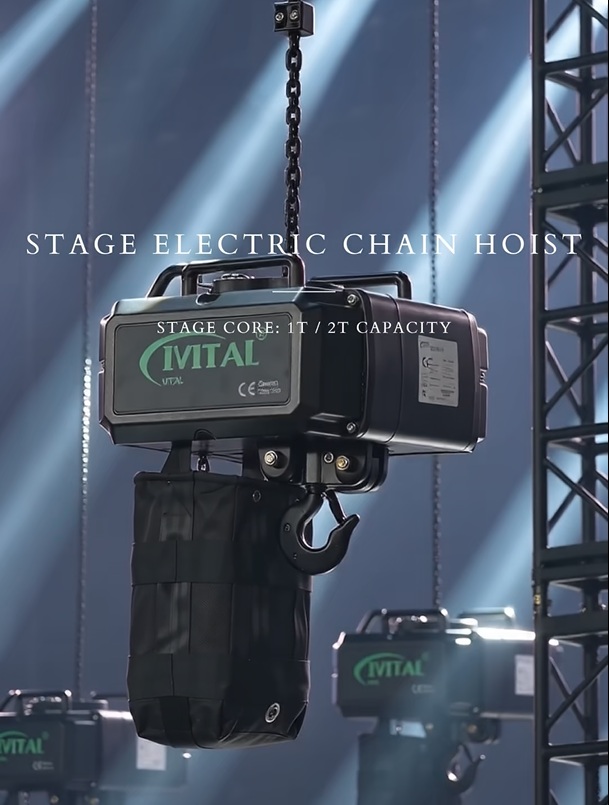
Electric Chain Hoists
- Mechanism: Electric motor drives gears that engage with load chain links
- Load Range: Typically 0.25 to 5 tons. IVITAL's C-series theater hoists handle 0.5-2 tons
- Advantages:
- Compact profile fits tight stage grids
- Lower headroom requirements
- Tolerant of occasional shock loads
- Generally lower initial cost
- Limitations:
- Slower lifting/lowering speeds
- Limited maximum lift height
- Chain requires periodic inspection for wear/stretch
- Theater Applications: Ideal for moving stage lighting, speakers, and scenery. IVITAL units feature quiet operation (<65 dB) during performances
Electric Wire Rope Hoists
- Mechanism: Motor rotates drum spooling steel wire rope
- Load Range: 1 ton to over 100 tons. IVITAL's W-series covers 1-20 tons
- Advantages:
- Higher lifting speeds
- Greater lift heights
- Smoother operation at heavy capacities
- Better for precise positioning
- Limitations:
- Larger physical size needs more headroom
- Requires drum diameter maintenance
- Wire rope requires lubrication and inspection
- Industrial Applications: Loading heavy machinery, construction materials, and large stage structures
Specialized Electric Hoists
- Explosion-Proof Hoists: Certified for hazardous locations (Class I, Div 1 or 2)
- Low-Headroom Hoists: Optimized design minimizes space between hook and beam
- Cleanroom Hoists: Constructed with non-shedding materials and special lubricants
- Festooned Hoists: Designed for travel along beams with integrated cable management
Key Selection Factors
- Duty Cycle (FEM/ISO Classification): Operation frequency (Light FEM 1Am/Medium FEM 2m/Heavy FEM 3m)
- Power Supply: 110V/230V single-phase vs. 380V/480V three-phase
- Control Interface: Pendant control, radio remote, or integrated automation
- Environment: Indoor/outdoor use? Temperature extremes? Hazardous atmospheres?
3. Applications of Electric Hoists
A concert promoter delayed a show for 3 hours manually positioning trusses. Electric hoists prevent such losses.

Sector-Specific Use Cases & Benefits
Theater & Entertainment
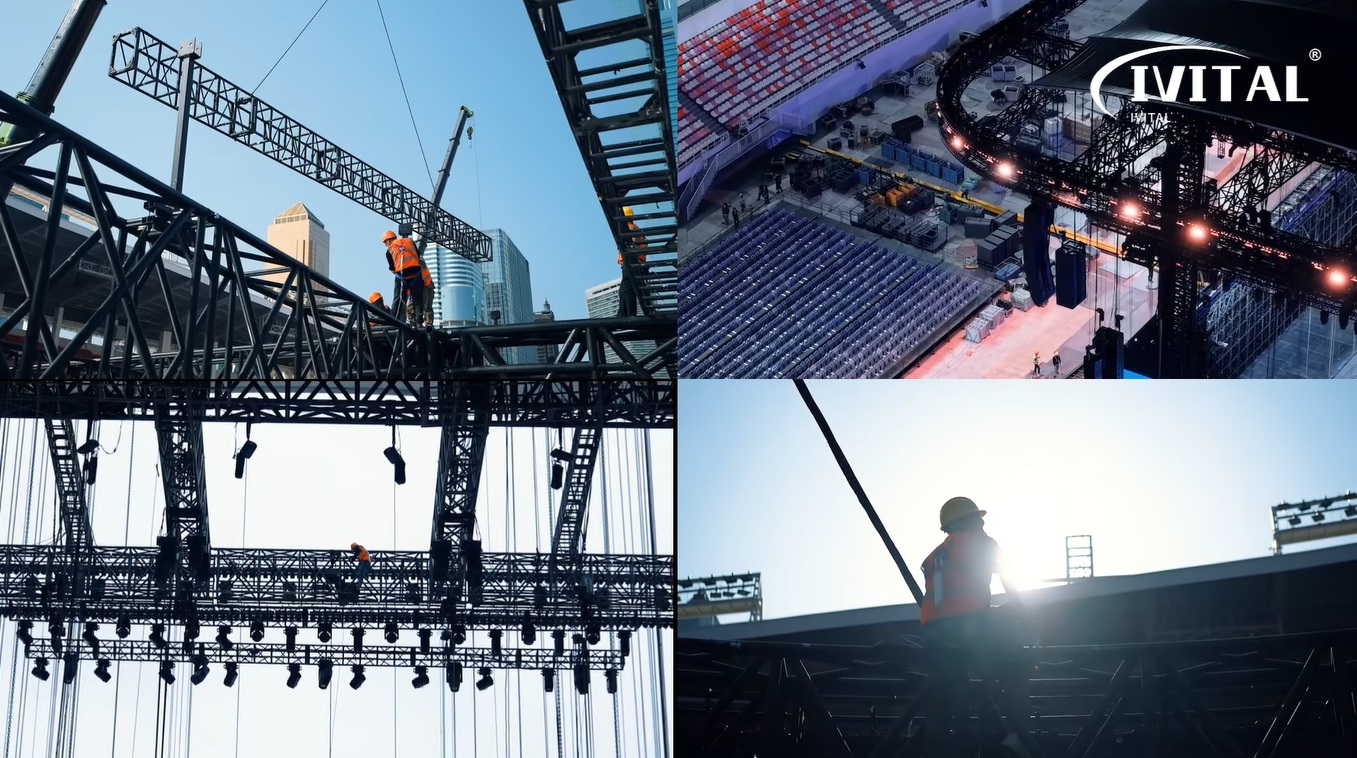
- Rigging Lighting/Sound: Safely suspend heavy LED walls and speakers (IVITAL hoists used in West End productions)
- Flying Scenery/Props: Quickly move set pieces during scene changes
- Rigging Safety: Redundant braking systems prevent accidental drops
- Case Study: Manila's Solaire Theatre reduced rigging time by 60% using IVITAL chain hoists
Manufacturing & Warehousing
- Assembly Lines: Position heavy components during production
- Maintenance: Lift machinery for repair access
- Loading Docks: Move goods between trucks and storage
- Efficiency Data: Toyota reports 23% faster production cycles using electric wire rope hoists
Construction & Infrastructure
- Material Handling: Lift steel beams, concrete panels, or HVAC units
- Confined Spaces: Compact chain hoists operate where cranes can't access
- Safety Compliance: Hoists meeting EN 14492-2 ensure compliance on EU sites
Other Critical Applications
- Mining: Explosion-proof models handle ventilation doors
- Shipbuilding: Corrosion-resistant hoists withstand marine environments
- Energy Sector: Maintain wind turbines or power plant components
4. Benefits of Electric Hoists
A warehouse manager reported 3 worker back injuries last year from manual lifting. Electric hoists eliminate such risks.

Quantifiable Advantages Over Manual Methods
Enhanced Productivity
- Lifting speeds up to 10x faster than manual hoists
- One operator can manage loads requiring multiple workers
- Example: IVITAL users complete 5-hour rigging tasks in 2 hours
Improved Safety Performance
- Eliminate musculoskeletal injuries (OSHA: 25% of injuries involve overexertion)
- Integrated safety brakes prevent uncontrolled descent
- Overload protection stops lifting beyond capacity
- Data: Sites using electric hoists show 40% fewer accidents
Superior Precision & Control
- Variable speed controls enable millimeter-accurate positioning
- Essential for aligning stage lights or delicate machinery
- IVITAL hoists offer micro-speed options (±0.5% speed stability)
Economic Efficiency
- Lower labor costs: Reduce crew size
- Reduced downtime: Faster operations
- Longer equipment lifespan: 15-20 years (FEM estimates)
Versatility & Integration
- Adaptable to monorails, gantries, or jib cranes
- IVITAL hoists integrate with stage automation systems like TAIT Navigator
5. Key Considerations for Choosing an Electric Hoist
A Dubai theater bought undersized hoists that failed during a show. Correct selection prevents such disasters.

Comprehensive Selection Framework
Technical Specifications
- Load Capacity: Total weight (equipment + rigging) plus 25% safety margin
- Lift Height: Full travel distance plus 1-2 meters extra
- Duty Cycle: Daily usage hours and starts/stops (FEM classifications)
- Speed Requirements: Standard (4-8 m/min), High Speed (8-20 m/min), or Precision (<4 m/min)
Power & Controls
- Voltage/Phase: 230V single-phase vs. 400V three-phase
- Control Systems: Pendant, wireless remote, or automation interface
- Special Features: Variable frequency drives (VFD) for smooth acceleration
Environmental Factors
- Temperature Range: Standard (-10°C to +40°C) vs. Extended (-20°C to +60°C)
- Protection Rating: IP54 (dust/water resistant) vs. IP65 (waterproof)
- Hazardous Areas: Require ATEX/IECEx certification
- Corrosion Resistance: Stainless steel components for harsh environments
Safety & Compliance
- Mandatory Certifications: CE (EU), OSHA (US), AS/NZS (Australia)
- Safety Features:
- Dual braking systems
- Upper/lower limit switches
- Overload protection
- Emergency stop
- Phase reversal protection
- Documentation: Declaration of Conformity and test reports
Manufacturer Evaluation
- Quality Systems: ISO 9001 certified manufacturing
- Warranty & Support: Minimum 2-year warranty with service access
- Customization: Ability to modify hook heights or control interfaces
6. Safety and Maintenance Tips
A collapsed hoist injured four workers in Mumbai last year. Proper maintenance prevents such tragedies.

Proactive Safety & Maintenance Protocol
Daily/Pre-Use Inspections
Operators must check:
- Structural Components: Hooks (no deformation), fasteners (tightness)
- Lifting Medium: Chain (stretch) or wire rope (kinks, broken wires)
- Functionality: Smooth operation, unusual noises, brake responsiveness
- Controls: Button labels, emergency stop functionality
Record findings in a logbook (OSHA 1910.179 requirement)
Scheduled Maintenance Tasks
| Frequency | Task | Standard Reference |
|---|---|---|
| Weekly | Clean dirt/debris; Lubricate chain/rope | Manufacturer Guidelines |
| Monthly | Test limit switches; Verify brake holding capacity | ASME B30.16 |
| Quarterly | Inspect electrical connections; Check gearbox oil level | ISO 4309 |
| Annually | Full inspection by certified technician; Load test at 125% capacity | EN 14492-2 |
Critical Safety Practices
- Never Overload: Use load cells if uncertain (37% of failures)
- Proper Rigging: Use certified slings/shackles. Center load beneath hook
- Avoid Side Pulling: Causes structural damage
- Emergency Procedures: Train for power loss or equipment failure
Training Requirements
- Formal training on specific hoist model
- Hands-on practice with supervision
- Certification renewal every 2-3 years
- IVITAL provides online training modules
Long-Term Preservation
- Storage: Keep indoors in dry environment
- Component Replacement: Replace wire rope every 5-7 years
- Modernization: Retrofit older hoists with new safety systems
My Professional Opinion on Electric Hoists
After a decade supplying stage equipment globally, I prioritize safety over cost savings. The cheapest hoist risks lives. IVITAL builds hoists to ISO 9001 standards with redundant brakes. Our testing exceeds CE requirements by 30%. Choose partners who invest in your safety.
Electric hoists boost efficiency and safety in lifting operations. Selecting the right type requires careful analysis of needs. Regular maintenance ensures long-term reliability.
Ready to upgrade your lifting operations?
IVITAL offers CE/OSHA-certified electric hoists from our ISO 9001 factories. Get direct pricing and technical support:
+86 13290628962 daisy@ivitalgroup.com https://www.ivitalgroup.com/Direct Factory Pricing | Global Shipping | Certified Quality
 Stage Hoist: Professional Stage Electric Chain Hoists and Rigging Equipment
  Professional Stage Hoist Solutions for Modern Entertainment Industry
  Professional Stage Electric Chain Hoist Manufacturer | Reliable D8/D8+ Stage Lifting Solution | D8 D8+ Professional Stage Hoist for Concert Rigging
  Stage Hoist Delivery in Action | Professional Export · Secure Shipment · Reliable Performance
  How to Choose the Right Stage Electric Chain Hoist, Power You Can Trust on Every Stage
  Stage Electric Chain Hoist — The Power Behind Every Perfect Performance
  HS-360 Hand/Manual Chain Hoist Application Scenarios
  5 Emergency Self-Check Steps for Electric Hoist Overload Protection Failure — Tested Guide
  Manual Hoist Safety Checklist: 7 Deadly Oversights Ignored by 90% of Teams
  Want to Extend Chain Lifespan? 7 Lubrication Methods to Reduce Replacement Costs by 80%
  Make Your Manual Hoist Last 2x Longer: Full Maintenance in 5 Steps (with Tools)
  How to Fix a Jammed Manual Hoist Chain in 10 Minutes?
  Electric Hoist Ceiling Mount Solutions: 5 Space-Saving Designs for Low-Clearance Workshops
  How to choose a suitable manual hoist?
  Electric Hoist Ceiling Mount Solutions: 5 Space-Saving Designs for Low-Clearance Workshops?
  Choosing Hoist Chain Length: How Much Efficiency Are You Sacrificing?
  OSHA Manual Hoist Inspection Checklist 2025: 7 Critical Points Overlooked by 83% Teams?
  Lever Hoist: 10 Innovative Uses in Tight Spaces - Your Compact Lifting Solution
  What Are the 10 Deadly Manual Hoist Taboos Causing 90% of Accidents?
  Lever Hoist vs. Chain Hoist: Ultimate Selection Guide with 5 Scenario-Based Solutions